

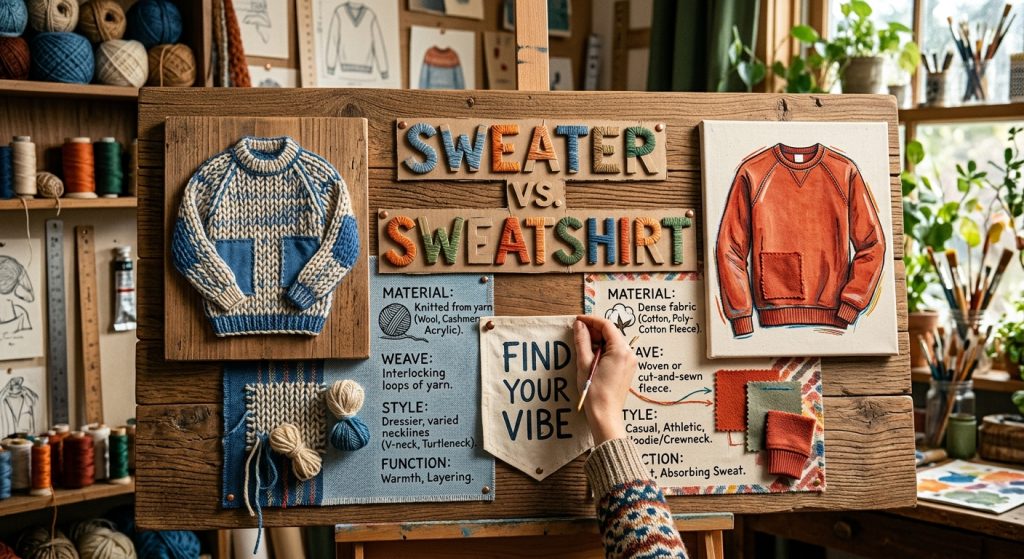
When cold weather hits, grabbing a warm layer is top priority. However, reaching into your closet often brings up a common fashion question: what is the actual sweater or sweatshirt difference?
While both garments keep you warm when temperatures drop, they are crafted differently, serve distinct stylistic purposes, and react differently to moisture and movement. Knowing how to tell them apart helps you build a versatile wardrobe, stay comfortable in any climate, and dress appropriately for any event.
What Is a Sweater?
A sweater is a knitted garment designed to cover the upper body. It is made by interlocking loops of yarn either by hand using knitting needles or by automated industrial knitting machines.
Key Features of a Sweater
- Materials: Commonly crafted from natural animal fibers like wool, cashmere, and alpaca, or from breathable plant fibers like heavy cotton. Most widely used Synthetic yarns are acrylic and polyester.
- Construction: Built through visible knitted rows. The knit structure can range from ultra-thin, smooth gauge (like fine merino wool) to thick, chunky cables.
- Styles: Comes in various necklines and shapes, including crew necks, V-necks, turtlenecks, cardigans (button-up or zip-up), and waistcoats.
- Best Uses: Formal office wear, smart casual dinners, layering over dress shirts, and cold-weather insulation.
What Is a Sweatshirt?
A sweatshirt is a casual, athletic garment made from heavy woven or cut and sewn fabric most notably cotton or cotton-polyester fleece.
Key Features of a Sweatshirt
- Materials: Primary composition includes heavy duty cotton jersey, French terry, or fleece-backed poly-cotton blends.
- Construction: Made using standard flat fabric panels cut and stitched together at the shoulders, sleeves, and sides. The inside is typically brushed for softness (fleece) or looped (French terry) to absorb sweat.
- Styles: Most commonly styled as crewneck pullovers or hooded tops (hoodies), featuring ribbed cuffs, a ribbed collar, and a elasticated hem.
- Best Uses: Athletics, gym workouts, relaxing at home, street style fashion, and outdoor yard work.
4 Key Points That Shows Sweater or Sweatshirt Difference
Understanding the technical nuances makes choosing between a sweater and a sweatshirt straightforward.
Fabric Construction and Texture
The main distinction lies in how does the clothing produced:
- Continuous strands of yarn looped together to form sweaters. This creates tiny gaps in the fabric pattern that allow air to circulate while trapping body heat inside the yarn fibers.
- Sweatshirts are made from pre woven flat fabric. The interior is treated specifically for comfort either brushed into a soft fleece lining or finished with absorbent loops of cotton thread (French terry).
Moisture Absorption and Breathability
- Sweatshirts were originally created in the 1920s as comfortable alternatives to itchy wool athletic gear. Their primary function was to absorb sweat during training.
- Sweaters focus entirely on thermal insulation. High-end natural fibers like wool regulate body temperature efficiently, keeping you warm without trapping excess humidity against the skin.
Durability and Fabric Maintenance
- Sweatshirts excel in daily durability. You can toss a cotton fleece sweatshirt into a standard washing machine and tumble dryer without worrying about shrinkage or shape loss.
- Sweaters require extra care. Animal fibers like wool and cashmere shrink easily under high heat and agitation. Many sweaters require hand washing in cold water, drying flat on a towel, or professional dry cleaning.
Style Versatility and Dress Codes
- When to Wear a Sweater: Opt for a sweater when you need an elevated, put-together appearance. Fine-knit crew necks look sleek under blazer jackets, while V-neck sweaters pair seamlessly over collared dress shirts for office settings.
- When to Wear a Sweatshirt: Reach for a sweatshirt when comfort, mobility, and casual style are the goals. Sweatshirts pair effortlessly with jeans, joggers, shorts, and casual sneakers.
How to Choose the Right Layer for Your Needs
When deciding which top to wear, keep three simple questions in mind:
Where are you going?
If you are heading to the office, a dinner date, or a family holiday gathering, choose a sweater. If you are going to the gym, running errands, or staying home, grab a sweatshirt.
What is the temperature?
For freezing temperatures, a heavy wool or cashmere sweater provides superior warmth without requiring bulk. For mild weather or indoor spaces, a mid-weight cotton sweatshirt offers ideal light insulation.
How much time do you want to spend on laundry?
If you prefer low maintenance clothes that can go straight into the washing machine, sweatshirts are your best option. If you do not mind low-heat washing and drying garments flat, sweaters add great variety and texture to your closet.
FAQs
A hoodie is a specific type of sweatshirt that includes an attached hood and often features a front kangaroo pocket or a full zip. Because it made from cut and sewn cotton fleece or French terry fabric rather than knitted yarn, it falls firmly into the sweatshirt family. Looking to choose best fabric for your hoodie.
It depends on your workplace dress code. In casual offices or creative environments, a clean, fitted crewneck sweatshirt in a solid neutral color (like navy, gray, or black) paired with dark jeans or chinos works well. However, for business-casual or formal settings, a fine-knit wool or cotton sweater is always the safer, more professional choice.
Generally, a sweater made from natural animal fibers (such as wool, cashmere, or alpaca) is warmer than a standard cotton sweatshirt. Wool fibers naturally trap air pockets to create superior insulation without adding heavy bulk. However, a thick, heavyweight fleece-lined sweatshirt can be warmer than a thin, fine-gauge cotton sweater.
Benjamin Russell Jr. invented garment originally in the late 1920s, a college football player who wanted a comfortable, sweat absorbing cotton alternative to itchy wool football uniforms. While it has evolved into everyday casual fashion, it retains its original athletic name.
To prevent shrinkage, always check the care label first. Wash your sweaters by hand or on a delicate machine cycle using cold water and a gentle liquid detergent. Never wring out a sweater; instead, gently press out excess water and lay it flat on a dry towel away from direct heat and sunlight.
Yes, “jumper” and “sweater” refer to the same garment. “Jumper” is a British, Australian, and South African English word and “sweater” is an American and Canadian English word.